
Girls’ Rugby League in the UK is experiencing unprecedented growth, highlighted by a 35% surge in female participation alongside a structured national expansion driven by the Rugby Football League (RFL). Long considered a male-dominated sport, grassroots initiatives, schools, and professional pathways have reshaped Rugby League into one of the country’s fastest-growing female team sports.
Rapidly Expanding Structural Divisions
To support skyrocketing player numbers, the RFL overhauled its competition framework under the National Community Rugby League (NCRL) structure. This created dedicated age-group divisions that safely guide young athletes from primary school to open-age leagues.
Expanded Age Brackets: Youth competitions span seven separate divisions: U11s, U12s, U13s, U14s, U15s, U16s, and U18s.
The U18 Bridge: The introduction of the U18s division successfully bridges the historical gap between youth leagues and adult competitions, preventing teenage drop-outs.
Southern Expansion: While the sport is traditionally rooted in the North of England, the game is expanding south. A milestone Girls Under 14s Southern League launched with teams like the Brighton & Hove Bulls, Brixton Bulls, Elmbridge Eagles, and Sidcup Sharks.
Grassroots Catalysts & School Programs
Growth is heavily fueled by specialized introductory programs designed to build physical confidence in a supportive environment.
The RugBees Initiative: This RFL-backed program introduces primary-school-aged girls to the sport using fun, non-contact, movement-based activities. Grassroots clubs, such as the Holderness Vikings, have used RugBees to successfully launch entirely new youth teams.
Champion Schools Competition: Initially launched as a single-year tournament, the RFL’s national school program covers all five secondary school age groups. Regional qualifiers run from Cumbria down to London, drawing thousands of new students into the game annually.
Club-Level Surge: Community clubs are witnessing remarkable turnarounds. For example, clubs like Hull Wyke grew their regular female rosters tenfold, scaling from five to fifty active players.
Elite Pathways and Professionalization
Young girls now have clear, highly visible elite pathways that prove rugby league can be a viable career option:
Girls Talent Hubs: Targeted training centers across the North West and Yorkshire scout and develop high-potential U15 and U16 players.
Diploma in Sporting Excellence (DiSE): A formal “dual career” national program combining elite rugby development with full-time education for Year 12 and 13 students. Graduates regularly transition directly into the Senior England Women’s team.
The WSL Pathway: Betfred Women’s Super League (WSL) clubs run formalized talent academies for girls aged 14 and up, supported by massive milestones like women’s double-header finals at Wembley Stadium.
Overcoming Barriers: Health & Infrastructure
Despite the boom, structural hurdles remain. RFL data shows that while 90% of female players report enhanced mental wellbeing and self-confidence, many feel the sport still lacks equity in facilities and resources.
To counter this, the RFL launched the Women and Girls Health Programme, a first-of-its-kind education initiative providing youth coaches with training on female-specific health factors, including menstrual cycles, body confidence, and physical training adjustments. Concurrently, dedicated resource injections from the RFL National Facilities Strategy are upgrading local clubhouses to ensure girls have private, optimal changing spaces.
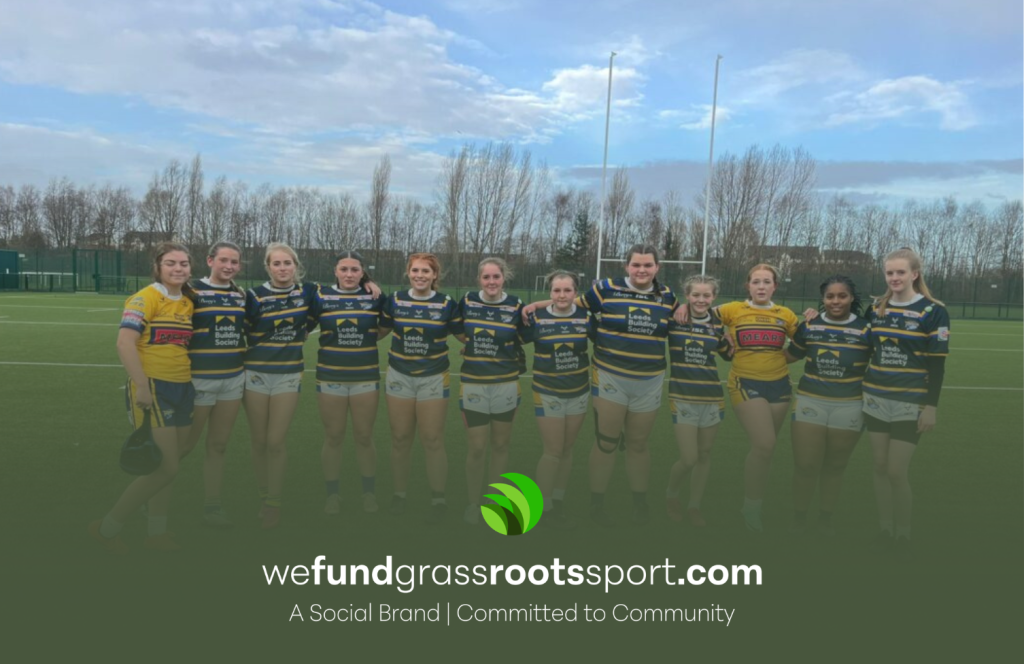
Image courtesy Leeds Rhinos Foundation